In distribution and serialized inventory environments, the "simple" act of swapping a defective unit for a customer can quietly damage financial integrity if not handled with discipline. A customer returns a serialized unit. The store hands them a new one from stock. The vendor agrees to replace or credit the defective unit. Everyone feels like the problem is solved.
Operationally, maybe. Financially, not necessarily.

If the return, replacement, and vendor recovery are not processed through a coordinated, native workflow, you introduce inventory distortions, floating receivables, vendor credits with no anchor document, and serial numbers that drift back into sellable stock when they should not. Those issues rarely explode immediately. They show up at month end, at audit time, or during margin review.
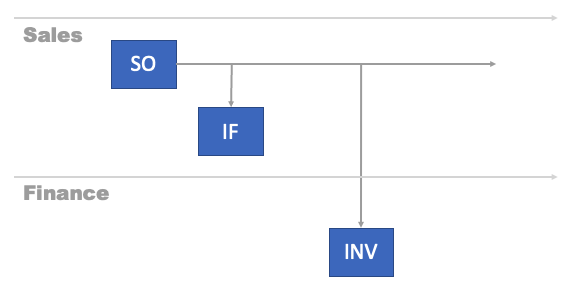
It starts by treating the replacement to the customer as a legitimate sale. The new serialized unit is issued through a standard Sales Order, fulfilled, and invoiced. That step ensures inventory decreases correctly and revenue is recorded in the proper period. It creates a real receivable that finance can see and control.
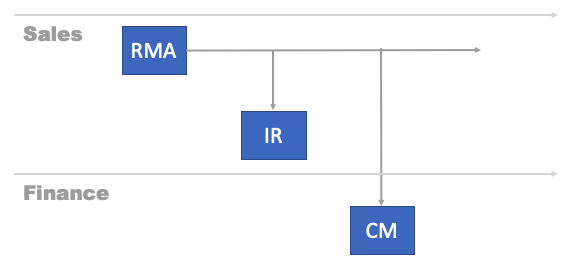
The customer’s returned unit is then processed through a standard Return Authorization. The exact serial number is received back into the system, and finance issues a credit memo that is applied to the open invoice from the replacement. At this point, accounts receivable is clean and the customer experience is complete.
But this is where many companies stop. And that is where problems begin.
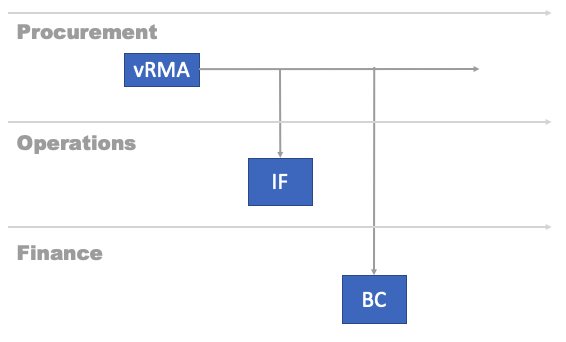
The returned serialized unit must not simply sit in available inventory. It needs to be formally committed to a vendor return so it cannot be accidentally resold. At the same time, if the vendor is sending a replacement or issuing a credit, that recovery needs to flow through payables in a controlled way.
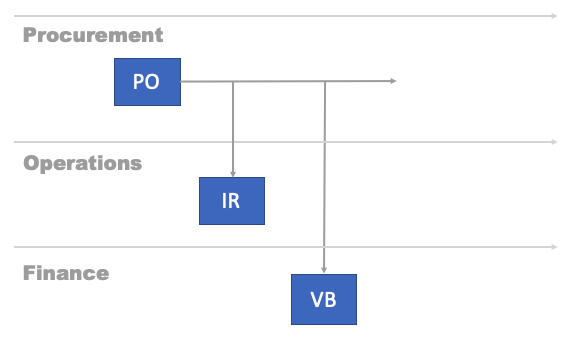
The procurement team creates a Purchase Order for the expected replacement. This establishes operational visibility for the warehouse and creates the payable document that will later be offset. When the vendor return authorization is created, the exact serial number is committed and shipped back to the vendor. Once the vendor credit is issued, finance applies it against the vendor bill tied to the purchase order.
Inventory is accurate, serial numbers are controlled, accounts receivable is settled, and accounts payable is reconciled. No manual inventory adjustments. No journal entries to “clean things up.” No orphaned credits.
From a CFO perspective, this process protects three areas simultaneously:
It is about respecting the structure that already exists. Native transactions, when sequenced correctly, create financial closure and operational clarity. When bypassed, they create noise that finance teams spend hours unwinding at month end.
Well-designed processes do not just move inventory. They protect margin, audit posture, and reporting confidence. That is the real objective.
At Left Ledger, we’re an independent NetSuite consultancy.
We don’t resell licenses
We don’t collect commission
We don’t push implementations
We help companies get more value out of NetSuite. If your financials, operations, or reporting feel fragmented, or if you simply want to modernize how your team uses NetSuite...
Let’s talk.
jack@leftledger.com
724-816-1000
LeftLedger.com
Here's what we've been up to recently.
This article is relevant to you if you are running your business on Oracle NetSuite and would like to add an isolated custom note on a transaction line. This article demonstrates a simple end to end architecture to customize and extend the capabilities of NetSuite.
This article will be relevant for you if your company is using NetSuite ERP, uses standard inventory items and a new business requirement arises where you now need the functionality of Serialized or Matrix for an existing item.
From us to your inbox.